
Unveiling Behind the Facades.
Architecture, Society and Culture: A Preliminary Essay

In a certain point of time, down the memory, people nestled in the heart of a vast city. It was a place of great beauty, with winding streets and symmetrical buildings that soared up into the sky. Architecture was the language of the people. It spoke of people’s hopes and dreams, their struggles and triumphs. The buildings they created were not just structures made of marbles, brick and mortar, but living, breathing testaments to their creativity and ingenuity. They built great cities that were works of art in themselves, filled with grand public spaces and breathtaking architecture. They built structures that were not just identified as a place, but extensions of their own beliefs and identities, and this civilization were the time of the so-called Ancient Greeks.
In order for their society to explain the origin of the universe, Greek philosophers took a completely different technique to explain the genesis of the universe to their culture. The laws of motion, the elements, and mathematics were employed to explore questions of beauty rather than resorting to the gods. They believed that in order to comprehend what makes something beautiful, one must provide evidence for its allure. Greek philosophers believed there was a numerical means to convey the idea of beauty. If one wanted to know if anything was visually appealing, one might just use mathematical concepts like proportion, symmetry, and harmony which was believed by a famous Philosopher, Aristotle (Saaris, 2018). But what does this notion of beauty therefore actually resemble?

Learn More About: Ancient Greek Architecture | Video
It was during 447 to 438 B.CE, when the Greeks created the Parthenon in honor of Athena, a Greek goddess. The structure's remarkable beauty is located on Athens' Acropolis, which is a community that has been elevated, often on a hillside, for both protection and status (Lee, 2015). This perhaps exemplifies the standard of beauty during its time as it shows perfect symmetry, proportion and scale. Its marble pillars gleamed in the sunlight, and its intricate carvings told the story of a people who had risen from the ashes of war and destruction to create something truly magnificent.
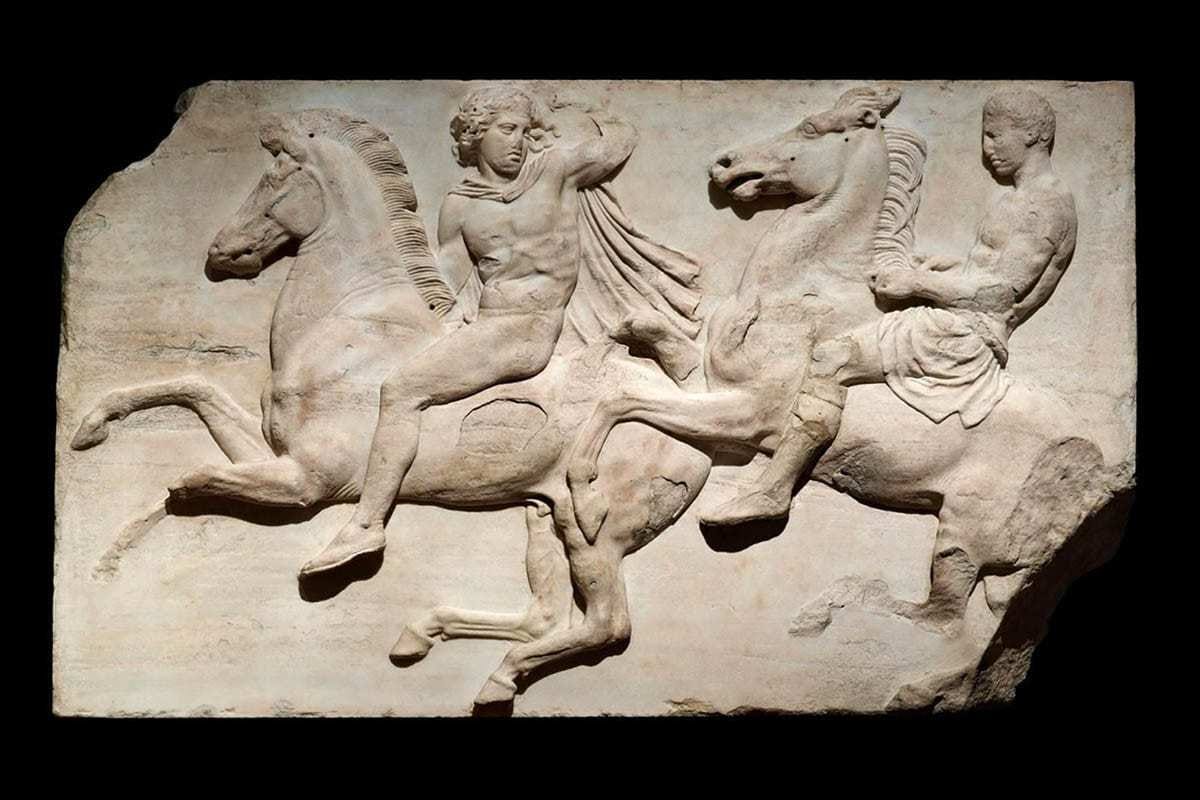
Classical Greek Mounted Horsemen on Parthenon Frieze, designed by Phidias, 447-32 BC, via The British Museum, London
Athenian temples not only focused on its overall appearance but also the details that reflect their story. This includes a frieze, a sculpture made of pentellic marble, located on the top portion of the Parthenon. The two men were riding their horses, as seen in the picture, as though they were part of a procession of people who would ascend the Acropolis and make their way to the temple's entrance at the end of the significant celebration honoring their gods. Despite the possibility of interpretation, this depicts the culture and way of life of the ancient Greeks. The Parthenon stood tall and proud as it symbolizes Athenians. It served as a temple, the gods' residence, and a representation of how they lived. Together, they are building a world that is truly their own, a world that is a reflection of its people through arts and architecture. This magnificent ancient edifice had a significant impact that shows beauty and elegance in Architecture owing to the deep beliefs and dedication of their civilization designed to be a symbol of their collective spirit and identity.
*Warning: This may contain information that readers might find disturbing.
No matter how magnificent as the buildings of the Ancient Greeks were, architecture in many places and cultures can also be a manner of symbolizing silence and conveying a message of tribute, memory and recollection of the past. It was across the Europe, when people decided to have built memorials to remember and honor the Holocaust. Every single one strives to maintain the historical memory to mold the recollections of future generations. The Berlin Holocaust Memorial is a mournful homage to the millions of lives lost during the Holocaust, a dark chapter in the history of mankind that will never be forgotten.

The memorial, located in the heart of Berlin, is a poignant testament to the constant impact of Nazi persecution. The 19,000 sqm site was designed by a Deconstructivist Architect, Peter Eisenman, and was opened to the public during 2005. As seen in the image above, it is photographed in such a way it can be perceive a thrilling eerie perspective. The people walk amid the slabs, taking in the vastness of the memorial and reflecting on the tragedy it represents, which portrays respect and tribute of the past. It is constructed of grey concrete slabs of unique sizes and heights showing austere and minimalist design which may evokes a sense of emptiness and sorrow. The reason behind the idea revolves around the intention of the architect to break away from Jewish iconography (Baldwin, 2020). This, however, raised critics and concerns regarding the memorial architectural design approach:
“Without that title, it would be impossible to know what the structure is meant to commemorate; there’s nothing about these concrete slabs that signifies any of the words of the title, except, perhaps, “memorial”—insofar as some of them, depending on their height, may resemble either headstones or sarcophagi. “
- Richard Brody, (2012)
Despite the public's opinions about the memorial, Peter Eisenmann used his design as a language that expresses the concept of “a field of otherness” that transforms a sense of being lost in space and time. This proves that Architecture and art is a form of expression but must be culturally sensitive to its context. Art must embody the values and attitudes toward significant aspects of life possessed by the culture where it was formed, despite the fact that it may be subjective. It shows an intent and message with careful thinking that further contributes to the society and culture of a place.
Looking towards the wider world, a famous Japanese architect creates buildings through his lens. He believes in the perfect interplay of components from the past and an optimistic strong future, which he frequently displays in a unique and daring approach that interprets traditions while framing nature, he is known to be Kengo Kuma.
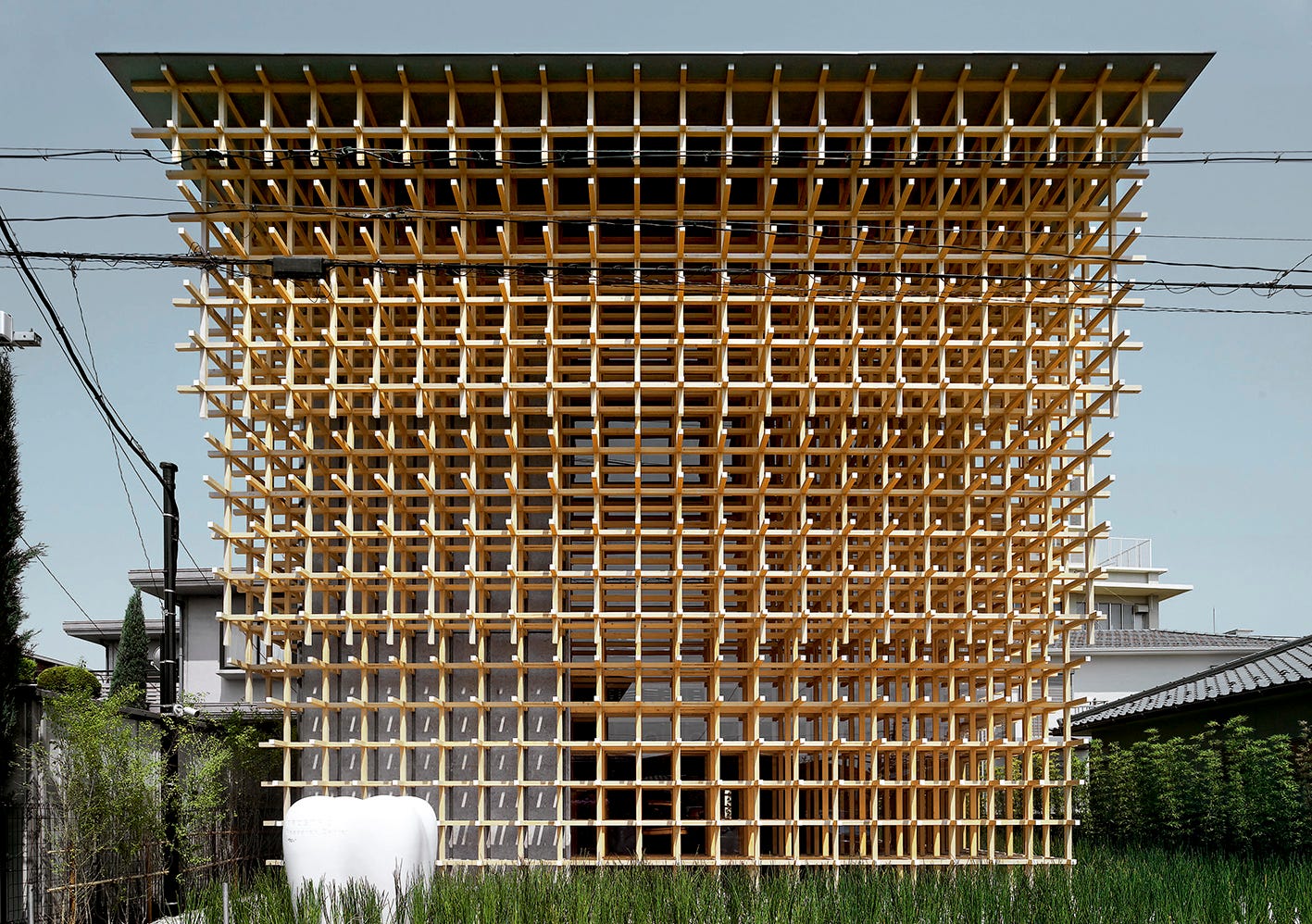
GC Prostho Museum Research Center by Kengo Kuma | Photographed by Daici Ano
Built in 2010, the Architecture is a museum and culture-centered structure based on the Cidori system, a classic Japanese toy. The Cidori is a simple arrangement of sticks of wood of equal length linked at their joints without the use of nails or other metal attachments. The illustration shows the balance and symmetry of elements along with its contextual materiality, wood, where Japan is known for. The architect portrays the culture and historical context of the place where the structure is located by using wood as medium of material representing his work. It demonstrates the wood's flexibility and softness, which may have suited both the Japanese way of life and mindset. Consequently, the compatibility of the Japanese people with the wooden material was demonstrated.
Overall, we cannot simply separate Architecture, Society, and Culture because they are all intertwined and complex in various ways. It influences how individuals interact with and think about their surroundings, which includes the sharing of similar views, values, and practices as a manifestation of their identity. In the end, this world of architecture, culture, and society were not perfect, but it was beautiful. There is beauty in diversity and to honor the unique perspectives that each person brought. It was a place of inspiration, where the power of creativity and ingenuity was harnessed with intention to create a better world for all. It was a place that would stand as a testament to their spirit and resilience for generations to come. As the years passed, the world of architecture and society continued to evolve. New technologies and materials were developed, and new styles and trends emerged. Behind its facade, there is a mystery of how it designs in a certain way, like a puzzle yet to be unveiled. But always, at the heart of it all, Architecture remained the people and their creativity as a reflection of the culture and society that created it.
References: